Sorry, you need to enable JavaScript to visit this website.
Skip to main content

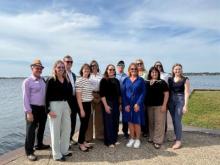
EPA and EGLE Celebrate Removal of Muskegon Lake Area of Concern from List of Most Environmentally Degraded Areas in the Great Lakes

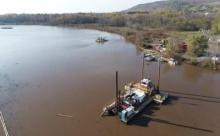
In September, Muskegon Lake became the 8th overall U.S. AOC delisted and the 7th delisted under the GLRI. The designation comes after years of restoration and remediation work which restored more than 134 acres of habitat and 6,000 linear feet of shoreline.
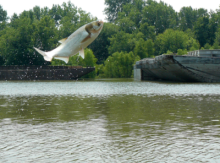

Identifying the Great Lakes top ten most impactful aquatic invaders

The Great Lakes are one of the most unique freshwater ecosystems in the world – but are also heavily threatened by biological invaders. Aquatic invasive and nuisance species are the plants and animals from other regions of the globe that accidentally get brought to the Great Lakes, potentially destroying the local ecosystem. Many species pose a significant threat to the Great Lakes environment and economy, from sea lamprey that devastate prized fisheries, zebra mussels that encrust underwater infrastructure, and aquatic weeds that entangle boat motors and swimmers alike.

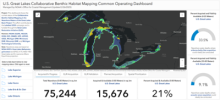
New Dashboard for Collaborative Great Lakes Benthic Habitat Mapping Project

The release of a new tool depicting bathymetric data and benthic habitat mapping for the Great Lakes Basin is released by NOAA’s Office for Coastal Management.

Great Lakes Restoration Initiative Achieves its Action Plan III Target with Monumental Remediation Efforts

The recent removal of the 128th Beneficial Use Impairment (BUI) marks the completion of a Great Lakes Restoration Initiative (GLRI) Action Plan III target.

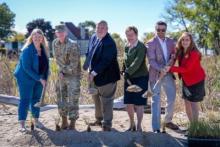
Port Clinton Coastal Restoration Project Restores Costal Wetland Along Ohio’s Lake Erie Shoreline

March 2025 - Federal, state, and local agencies celebrate significant progress in Lake Erie’s shoreline expansion through the implementation of the U.S. Army Corps of Engineers’ Great Lakes Fishery and Ecosystem Restoration Program and support from the Great Lakes Restoration Initiative.

Great Lakes Sediment Nutrient Reduction Program Releases a Request for Proposal for Great Lakes Water Quality Projects

On Feb. 28, 2025, the Great Lakes Commission (GLC) today issued a request for proposals (RFP) for projects that would help improve Great Lakes water quality by reducing nutrient loads from agricultural watersheds and eroding shorelines and streams.

National Park Service assists in improving the Waabizheshikana trail in the second largest Area of Concern in the U.S.

Utilizing funding from GLRI, the National Park Service Rivers, Trails, and Conservation Assistance Program (RTCA) has supported the City of Duluth, Minnesota, to improve and expand park and trail spaces near historically disadvantaged neighborhoods located along the St. Louis River Estuary. The initial revitalization efforts to improve Waabizheshikana: The Marten Trail will enhance residents’ opportunities to connect back to a cultural and ecologically significant area of the waterfront. Partners are working together to preserve and enhance this trail while promoting awareness of the interconnectedness between Indigenous heritage and environmental stewardship.

EPA announces Notice of Funding Opportunity to support the Great Lakes Coastal Wetland Monitoring Program

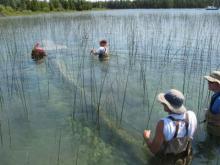
The EPA Great Lakes National Program Office has issued a notice of funding opportunity (NOFO) to conduct coastal wetlands sampling in support of the Great Lakes Coastal Wetlands Monitoring Program. The deadline to apply is March 14, 2025.

EPA announces Notice of Funding Opportunity to support the Great Lakes Fish Monitoring and Surveillance Program

The EPA has announced a notice of funding opportunity (NOFO) to conduct fish sample analysis in support of the Great Lakes Fish Monitoring and Surveillance Program. The deadline to apply is March 14, 2025.