



Cover crops have long been regarded as a tried-and-true method for preventing nutrient loss and preserving water quality. Now, a new study conducted by the University of Illinois with funding from The Nature Conservancy is showing that Great Lakes Restoration Initiative Demonstration Farm Networks, created by the USDA-Natural Resources Conservation Service and local partners, could be the key to getting more farmers to adopt this important conservation practice.
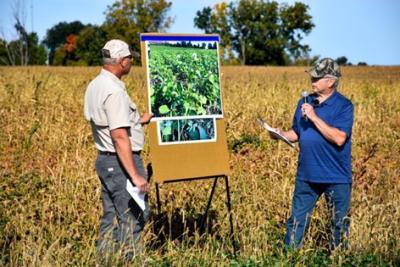
Demonstration farms receive one-on-one technical assistance to help implement and then showcase management practices that prevent nutrient runoff from farmlands through outreach and peer-to-peer learning. Participating farms host field days and tours for neighboring farms and resource professionals to share their successes and lessons learned in adopting new practices to motivate other farmers to try these approaches.
The study is the first quantitative investigation into the success of GLRI Demonstration Farms and analyzed satellite images to monitor the change in cover crop acreage in Eastern Wisconsin. The results showed a 50% increase during the four years following the implementation of local demonstration farms with an even greater increase present among acres within 5 or 10 kilometers of a demonstration farm.
The study makes a strong case for the success of Demonstration Farms and how they can be used to increase cover crop adoption among farmers in other parts of the Great Lakes. Ultimately, getting more farmers to participate will be crucial in preserving the Great Lakes as an important source of drinking water.
To learn more about the study, read the article on Farmdocdaily. To learn more about Wisconsin Demonstration Farm Networks, visit NRCS’s website.